




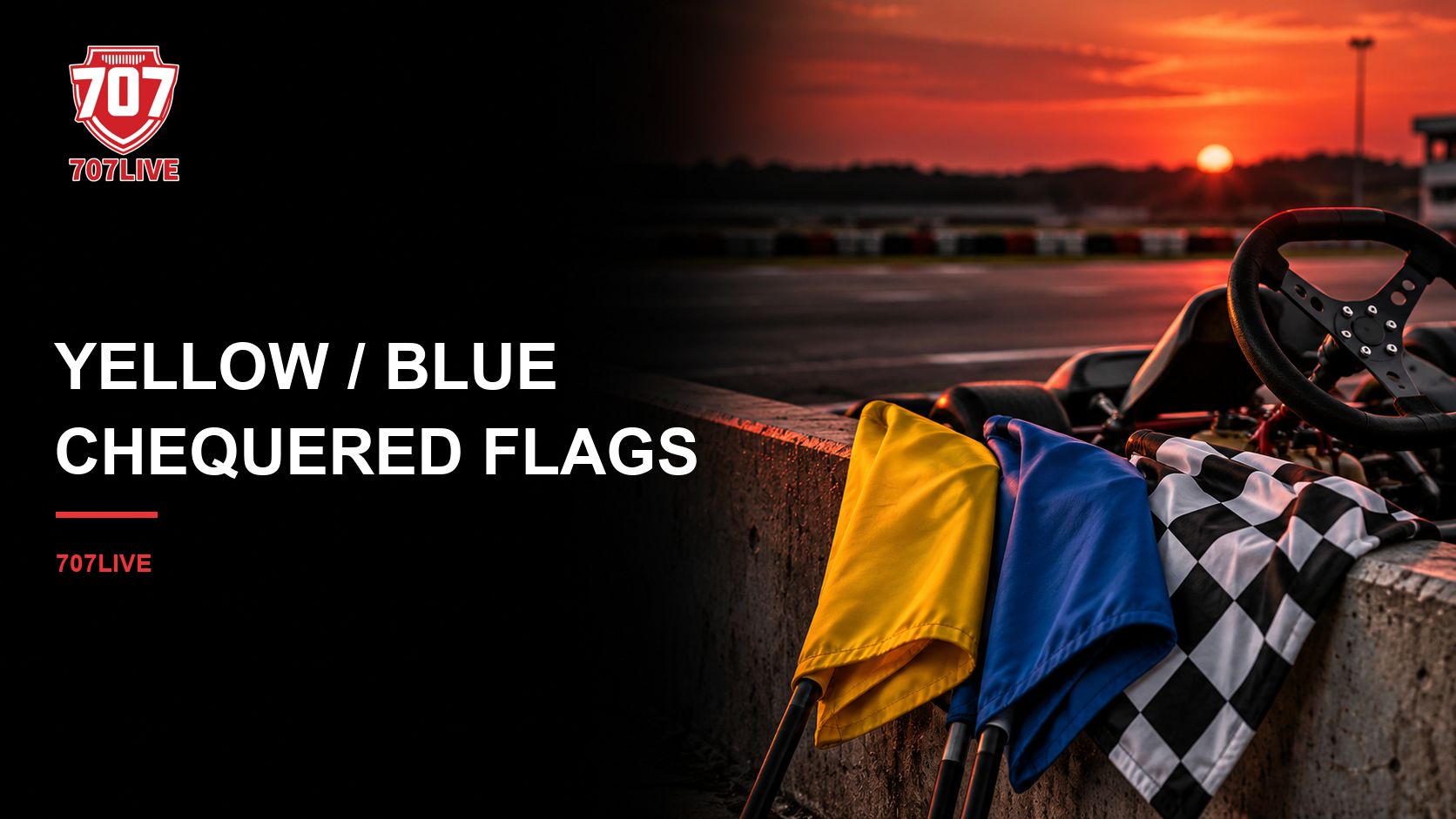
A flag at the side of a karting circuit can change how the next few seconds should be understood. A viewer may notice slowing traffic, a kart letting another through or a field completing its final lap. Reading the signal in its context helps connect those images.
This 707Livescore guide introduces three familiar flag colours for spectators: yellow, blue and the black-and-white chequered pattern. It explains a viewing method rather than instructions for driving. Competitors must follow their own event briefing, regulations and officials; an edited highlight is not a substitute for those directions.
Identify the signal and the session together
Begin with what is actually visible: the flag colour, the place it is displayed and whether the footage is practice, qualifying or a race. A cropped frame can lose the corner or session label that explains the surrounding action. Keep those details with any note you share.
For an initial reference, Kemin Karting Center publishes a short flag guide for its karting setting, while FIA material documents karting signalling equipment. These are useful sources for learning the vocabulary. They do not establish the detailed operating procedure of every Malaysian event, so avoid applying a borrowed paragraph as though it were that event’s complete rulebook.
Yellow is a warning to read the incident context
A yellow flag indicates danger and restrictions rather than a normal racing opportunity. The linked circuit guide associates it with slowing and no overtaking. For a spectator, the useful task is to identify where the warning appears and what the footage shows around that part of the circuit.
Imagine a replay beginning with two karts already slowing. Without the preceding angle, the clip may not show when the signal was first displayed. Describe that limit. Do not infer that one kart chose an unusual tactic simply because the edit omits the warning that could explain the change in pace.
Blue concerns the relationship between traffic
Blue is associated with faster traffic approaching from behind in the referenced karting guide. It draws attention to the relationship between the karts, not merely their visual distance in one camera angle. The applicable event procedure supplies the detailed obligations.
When writing a caption, identify the signal before making a claim about position. A blue flag in the frame does not, on its own, establish which driver is classified ahead at the end of the race. Read the session and results separately. This is especially useful when a highlight switches between track action and an unrelated timing graphic.
Chequered marks an ending, not the complete classification
The black-and-white chequered flag signals the end of the relevant session or race. A celebratory image can capture that moment, while a results document supplies the classified sporting order. Those two items complement each other rather than answering exactly the same question.
A 707Livescore reader can follow the finish in the video, then return to the event’s published result for the positions being reported. Retain any provisional status shown there. An image of one kart reaching the flag does not list every finisher, explain every earlier incident or establish whether a later official decision changed a position.
Connect a flag moment with the wider event story
The 707LIVE archive brings together race action, community scenes and organiser context. Its historical racing and karting activities were jointly organised with WABO Sports and Yung Motorsport. That background helps readers move from a short highlight to the relevant archived event, without treating every later racing story as part of the same programme.
For readers browsing both 707Livescore stories and 707Guarantee information, keep the purpose of each page clear: this guide explains race footage, while a platform-information page answers a different kind of question. When discussing a flag moment, start with the original event story, name the session and preserve the visible signal before adding an interpretation.
A brief caption can say that a yellow flag is visible near the corner while the preceding part of the incident is not shown. That preserves both the observation and its limit.
Sources and further context
- Kemin Karting Center — Flag guide (circuit-specific reference)
- FIA — Karting light-panel standard (equipment reference)
- Yung Motorsport — Organiser information
Continue with 707LIVE.
Frequently asked questions
Can one flag image establish every detail of an incident?
No. Keep the colour, display location, session and surrounding footage together before drawing conclusions.
What is yellow associated with in the linked circuit guide?
Danger, slowing and an overtaking restriction. The event’s own rules and briefing govern its exact procedure.
Does a blue flag tell me the final classified order?
No. Traffic information and the final race classification are different records.
Is the chequered flag a complete results sheet?
No. It marks an ending; use the event’s published classification for the full sporting result.